
Australia: The Land Where Time Began
|
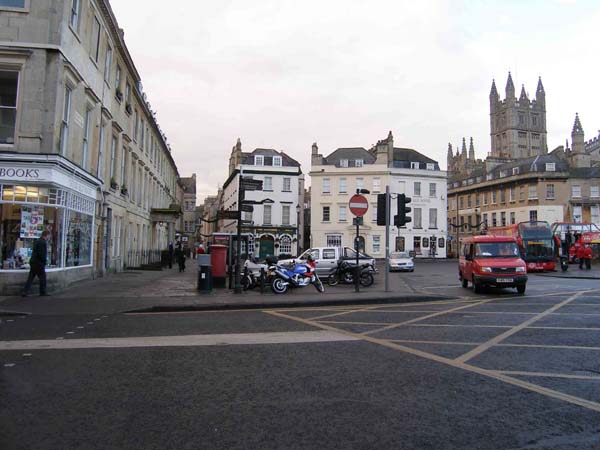
Bath, England A city 159 km (99 miles) from London. It is built around the only natural hot springs in the UK. Archaeological excavations have shown that the springs were frequented by Neolithic peoples and later the Celts had a shrine dedicated to their goddess Sulis at the site of the main hot spring where the Romans later built their bath house. It is believed the Romans occupied Bath not long after their 43 AD invasion. The Romans called it Aquae Sulis ("the waters of Sulis"). They identified the Celtic Sulis with their Minerva, which was the Roman name for the earlier Greek goddess Athena. During the Roman occupation Sulis was still worshipped, often by Romans as well as the native Celts. Rome had a history of incorporating the pantheon of conquered into their own, often associating them with traditional Roman gods. Metal pieces, curse tablets, have been recovered for the Sacred Spring that have messages scratched on them. The curse tablets were written in Latin and most cursed people who they believe had wronged them, the hope being that Sulis would read the messages and avenge the aggrieved author. At this time temples and bathing complexes were built, among the Great Bath The Anglo-Saxon Chronicle says Bath fell to the West Saxons in 577 following the Battle of Deorham. The Anglo-Saxons. The Anglo-Saxons called the town Baom, Baoan, or Baoon ("at the baths"), from which the present name derived. In 675 the king of the Hwicce, Osric, set up a monastic house at Bath. It is though he may have used a walled area as the precinct. In 781 King Offa of Mercia took control of the monastery and rebuilt the church, dedicated to St Peter. Bath had become a royal possession. The old Roman street pattern had been lost, so King Alfred the town laid out again, reserving the south-east quadrant for the abbey precinct. King William Rufus, the second surviving son of William the Conqueror, granted the city to John of Tours, a royal physician. He became Bishop of Wells and Abbot of Bath in 1088. By the 15 th century Bath Cathedral was neglected and badly dilapidated. In 1500 the bishop of Bath and Wells, Oliver King, rebuilt it on a smaller scale. In 1539, a few years after the completion of the cathedral, Bath Priory was dissolved. Henry VIII allowed the cathedral to deteriorate but it was restored in the following Elizabethan period. At this time the baths were improved and the bathing season began attracting the aristocracy. In 1590 it gained city status. On 5 July 1643, during the English Civil War, the Battle of Lansdowne was fought on the city's outskirts. More Information: http://www.sacredsites.com/europe/england/bath.html |
||


| Home |
| Journey Back Through Time |
| Geology |
| Biology |
| Fauna |
| Flora |
| Climate |
| Hydrology |
| Environment |
| Experience Australia |
| Aboriginal Australia |
| National Parks |
| Photo Galleries |
| Site Map |